Your landing page has one job, and it's not the one you think
Maria John on what makes someone decide to buy from you
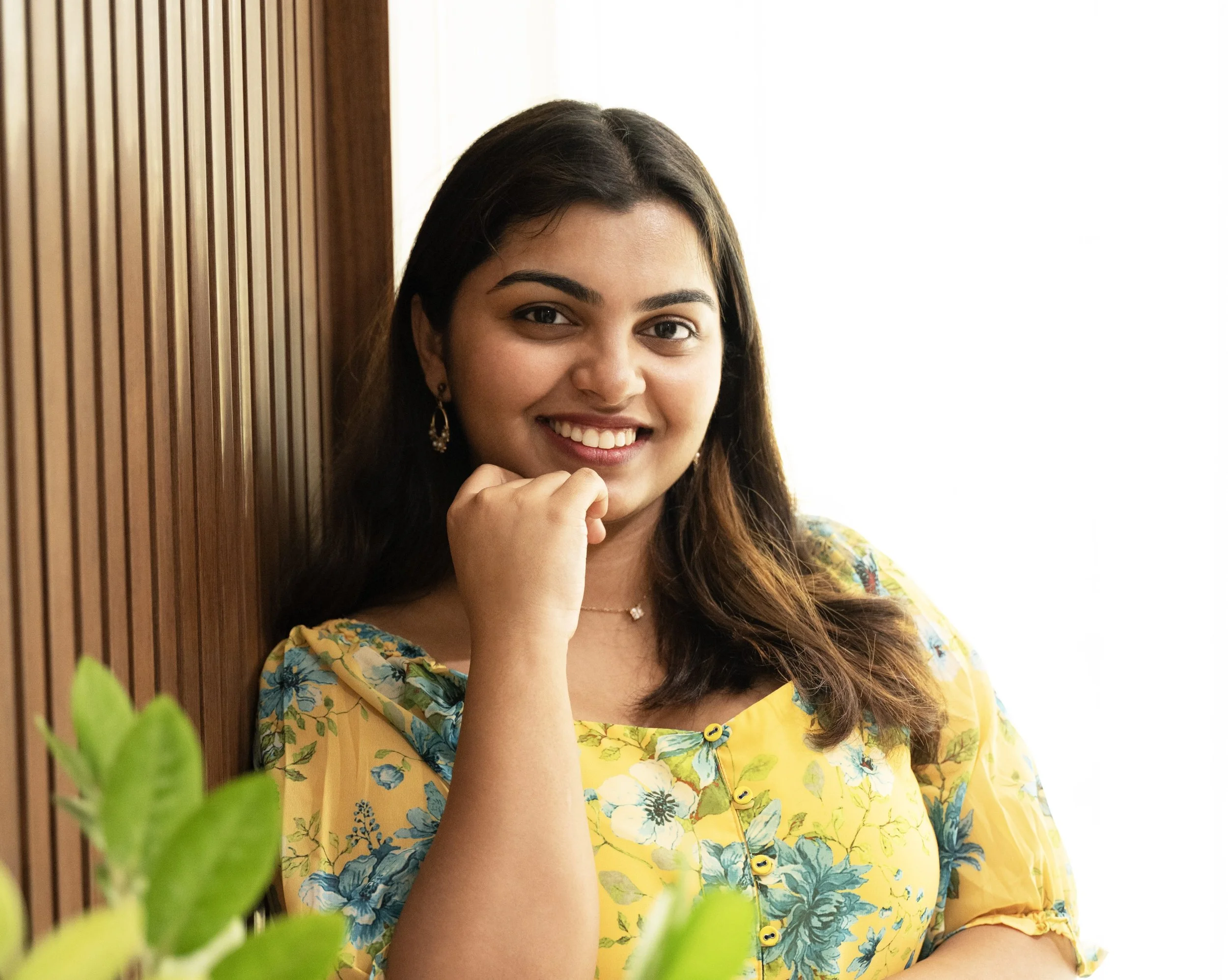
There are people you meet at the beginning of your business who end up shaping how you think about it for years to come.
Maria John is one of those people for me.
We met inside Jamie Brindle's community, back when we were both still figuring out what our businesses were going to be. I witnessed her build her copywriting practice from the ground up, and she is one of the people I trust most when it comes to how I show up online.
She wrote my copy, once my business direction was set. And before she did, I thought I had a pretty good handle on it. I had the features listed, the deliverables, the quantities, the certifications, the how-tos.
What I didn't have was any of the stuff that actually makes someone decide to buy: the transformation, the impact, the feeling of being seen by the right person at the right moment, and talking their language. Maria fixed all that.
She calls herself a conversion specialist now, not just a copywriter. And after watching what she did with my business, and what she does with her clients, that title makes complete sense. Because the words are the last thing, and what she's really doing is building the architecture that gets someone from "I'm curious" to "I'm in."
Maria is joining us as an expert guest inside the Solo Accelerator, where she'll be running a live session on high-converting landing pages. If you're not in the program yet and want to be in the room, you can find out more and join.
Most solopreneurs treat their sales page like a checkbox on a to-do list. Something to get done and move on.
You've seen hundreds of them. What happens when you treat a landing page like that?
People should understand one thing: your discovery isn’t a way to sell to the client. It’s a vibe-check.
What does that mean? Well, they should’ve already been sold to before they inquire with you.
Think of your lead as someone wandering into a store (aka a landing page) that highlights your offer.
Do you want a salesperson robotically rattling off everything about the offer or do you want a salesperson who invites the wandering lead to understand what makes the offer so good and why you should want it?
That’s why your sales page is just meant to be a salesperson for your offer.
A hack for you: think of the best version of yourself on a discovery call with your ideal customer.
How would they speak to a lead who knows nothing about your offer and lands on your sales page.
That’s exactly “who” should come through in the copy.
Before someone even opens a blank doc to write their sales page, what needs to be defined upfront? What do solopreneurs skip that comes back to bite them halfway through the page?
You’re probably already figuring out who your target audience is and what the offer.
But you want to figure out why they’d want your offer over anyone else’s?
This is where trust becomes very important and questioning if that has been nailed before writing an offer. That looks like questioning the trust in your:
Offer Delivery: Well, why is it that the way you conduct/deliver the offer is way better than anyone else at the price you’re offering it at? Important because they’re likely looking at similar offers in the marketplace.
Offer ROI: What is your offer claiming to provide to the buyer and how can you assure them it’s the truth? This falls back to your social proof backing that up.
Expertise: Why should they trust your expertise over anyone else’s. This is a really underrated part of sales page copy that people forget.
If the ratio above is off, so will your conversions.
So make sure you know exactly how to highlight the above in your copy. Once you nail these, writing becomes a lot easier.
You're obsessed with voice of customer research. What does that actually mean in practice, and why does it matter more than the copywriter's own instincts?
It’s not possible for the solopreneur to know everything about their ideal customer.
Because you end up presuming your ideal customer’s wants, desires, objections to your offer.
Let’s have you do an exercise that’ll take a minute.
Think of all the sales conversations you’ve had in discovery calls + DMs in the last six months. Specifically, think of the leads who you felt would’ve been a great fit and they said “no” because they’d “think about it”.
Now, if I ask you, “What’s the most common objection to your offer”, you will just presume the answer. A lot of people fall back on “price” being the major objection.
But if an outsider invites them on a call, and this can include your current customers, you can collect more realistic answers to this question. Answers that look like a pricing objection on the surface when really, it’s an “offer ROI” objection:
“I didn’t understand why I should pay so much for this offer.”
“I don’t see it benefiting me in the long run.”
“I’m scared. What if it doesn’t work out?”
Because price is almost never the real objection (unless someone really doesn’t have the money for it).
That’s exactly why I stress so much on VOC research (no, that doesn’t look like a pretend market research call that’s really a sales pitch). Where you ask questions to your ideal customers/past customers who fit the ideal customer profile, and getting real answers that help inform your offer, how to talk about it in your messaging, and how to market it.
The answers should give you insights on perceived value of your offers, perceived positioning, and real objections to it. And that makes your sales page copy stand out all the more.
If you’re not in a position to do this, dive deep into your feedback forms and discovery call transcripts.
Frameworks like Hormozi's value equation are everywhere. Solopreneurs copy the structure, tick the boxes, and still don't convert.
What's missing between following a recipe and actually making it work? And what does the recipe never tell you?
To be honest, these frameworks are helpful…but only when you’re starting out.
It’s similar to the way teachers use frameworks to teach math to kids. We then expect the kid to end up instinctively knowing how to add and subtract without using those formulas.
Frameworks are meant to be used for learning. I wouldn’t say they can be used to apply to your specific situation.
For eg: Hormozi applying his value equation to one of his products looks very different to a solopreneur in the beginning stages of their offer applying it to themselves.
Hormozi has an audience you do not. He has proven trust in his past offers, trust that he can borrow. He has a team with multiple capabilities supporting him; you might not.
That’s why you might be selling an offer for $2,000 while someone else sells that same offer for $16,000. The customer might prefer the latter just because of perceived value.
It’s why these frameworks come with a lot of caveats to your specific situation, offer, and industry.
Walk me through what you look for in the first 10 seconds of reading someone's page. What tells you immediately whether it's going to convert or not?
It goes back to what I said about the three factors to trust: offer deliverability, ROI, and expertise. So that usually looks like a lot of empty promises, flowery language to enhance the perceived value, and words that don’t sound like a person wrote it (and i’m not just talking about AI-prompted copy).
A high-converting page isn't just about what you say, it's about how you say it. Voice, tone, humour, the specific words that sound like you and no one else. That's something you nail exceptionally well.
How do you find that for a client, and how does a solopreneur start finding it for themselves?
Something I do when I write sales page for a client whose voice I’m not getting is asking them to either:
Send me a couple of recordings of their discovery calls
Send links to their newsletters, social media posts that they’ve written themselves (and not using AI).
Participate in a 1:1 workshop where I derive their brand voice
Pretend we’re on a discovery call and I’m the customer.
The first and last techniques is probably the best way to do it if you’re writing your own copy. In fact, you can record that specific video, get the transcript, and copy-paste it (after a little bit of editing) onto your sales page.
Why? Because you’ll be using words you’re already using, in a manner that’s specific to “you”.
You wrote my copy, and what stood out wasn't just the words, it was the process. The research, the questions, the way you extracted things I couldn't have articulated myself.
What does that process actually look like, and what do solopreneurs skip when they try to DIY it?
As a solopreneur, you are likely doing everything yourself. That means you have a biased view of the business, ideal customers, and perceived value of the offer.
My job really is to question that. And only then can we arrive at your unique positioning and the messaging to communicate that.
It’s why, with Ricardo, I conducted a 1:1 workshop to derive the answers and questioning everything he said from the perspective of an ideal customers who knows nothing about Ricardo, his offers, and his business.
That’s what you need to do. You need to question the way you’re presenting everything to your ideal customers because they’re already doing that. They’re looking for the first “out” because they’d rather not invest than make a bad investment.
And if you choose you to skip the hours spent figuring out your positioning and messaging, thinking you’d rather have AI do it for you, you’re risking your best-fit buyers looking for the first excuse not to purchase your product.
Social proof is everywhere on sales pages, but most of it blends into the background.
What makes a testimonial actually credible, especially when buyers are increasingly sceptical? And what role do case studies play that a testimonial simply can't?
Buyers are skeptical because they have an objection to your offer that looks like:
Price: “I don’t know if it’s worth the price”.
Applicability: “Can this really be applicable to my situation/niche?”
Feasibility: “I don’t know this offer/delivery/timeline is realistic.”
Expertise: “I don’t know if they’re the expert to trust.”
A bunch of others.
Each testimonial should ideally be handling an objection.
On the sales page, you likely have a ton of sections “promising” something or communicating the value of a specificity to your offer.
And as you space out that social proof on the page, can you actually tailor it to what you’re promising on the sales page?
For eg: if you’re highlighting a specific process, can you follow that up the testimonial that talks about that?
Let’s say you had a past client who loved the 1:1 workshop. Make sure their testimonial is headlined by a quote from their testimonial that talk about it.
Similarly, follow up your pricing section with testimonials that highlight the price. Follow any specific claims you’re making with social proof that highlights that.
Any skepticism they have will vanish.
Case studies work really well when you have a specific objection that’s hard to deal with solely based on a testimonial. Where the buyer’s skepticism persists and they look at your offer thinking, “Nah, that’s unrealistic/impossible/isn’t worth it.”
It’s especially true in the case of retainers, higher priced offers (or any offer priced above $2,500), or a very niche offer (so niche that it hardly has similar offers to look at).
It’s why case studies work so well in the above scenarios, because you’re inviting the lead to answer for their own objections and by inviting them to go on a journey with that past customer, it helps them understand why their skepticism is unnecessary and increases their desire for your offer.
When is the sales page not the problem? What are the signs that the copy is fine and the issue is somewhere else entirely?
I never write sales page copy for anyone who hasn’t sold it three times (and i’m not including beta testers who tried it for free).
So before investing the time and resources into packing and selling an offer, get beta testers who paid, however little, for it.
I still do this years into running a business.
For eg: I developed my case study offer in December 2024, suggesting it to a company on a kickoff call after I realized they only had three testimonials. I priced it super low.
Once i got a second testimonial, I wrote a Google Doc sales page that had the bare minimum (offer details, delivery, price, about me, testimonials).
Once I sold 19 of them, that’s when I invested in a business strategy session, SEO, and a designer to help me develop the landing page that you see here.
You know an offer is good when people buy it. But you can’t sell it at a high price without testimonials, without proof that it works.
So your offer might be good. You might just have terrible testimonials, it’s not worth it at the price you’re offering (and no, it doesn’t matter if you’re pricing less than your time), or it’s actually an offer nobody wants.
So, sell the first 1-2 spots without a sales page, write a basic one until you get to 5 testimonials (And i’m not talking the “this offer is good” testimonial but the “this offer helped me to X/Y/Z”), and then invest the resources into it once you’ve validated it. This validation process is one you cannot skip.
Because you cannot get good copy without understanding the perceived value of it.
For someone sitting down this week to look at their sales page for the first time in a while, what's the one thing you want them to check before anything else?
Three easy things:
When a lead reads your headline, will they instantly get the value and ROI of your offer?
Is the actual offer clear or do they need to scroll down to understand what the offer even is?
Does your social proof highlight the offer value or is it highlighting surface level compliments like “X was amazing to work with” or “This offer is brilliant”. Instead, headline each with a quote that talks to the ROI of the offer.
Where and how can people connect with you?