Why you can’t find time for strategy
EVERYONE SAYS “WORK ON YOUR BUSINESS.” ALMOST NOBODY DOES.
Everyone says you should work on your business, not just in it.
You’ve probably heard this advice dozens of times, and in theory, it makes complete sense. But if you’re running a solo business, you already know the problem: almost nobody actually does it.
The reason is simple: client work flooded the entire week, deadlines, projects, emails, calls, invoices and all the firefighting.
By the time Friday arrives, the idea of sitting down and thinking strategically about your business feels almost luxurious, and even if you have the time, you are beat.
So you tell yourself you’ll do it next week. But we know the drill, next week arrives and the same thing happens again: more client work, more deliverables, more random noise.
And strategy gets postponed again. Groundhog day anyone?!
This is one of the most common traps in solopreneurship.
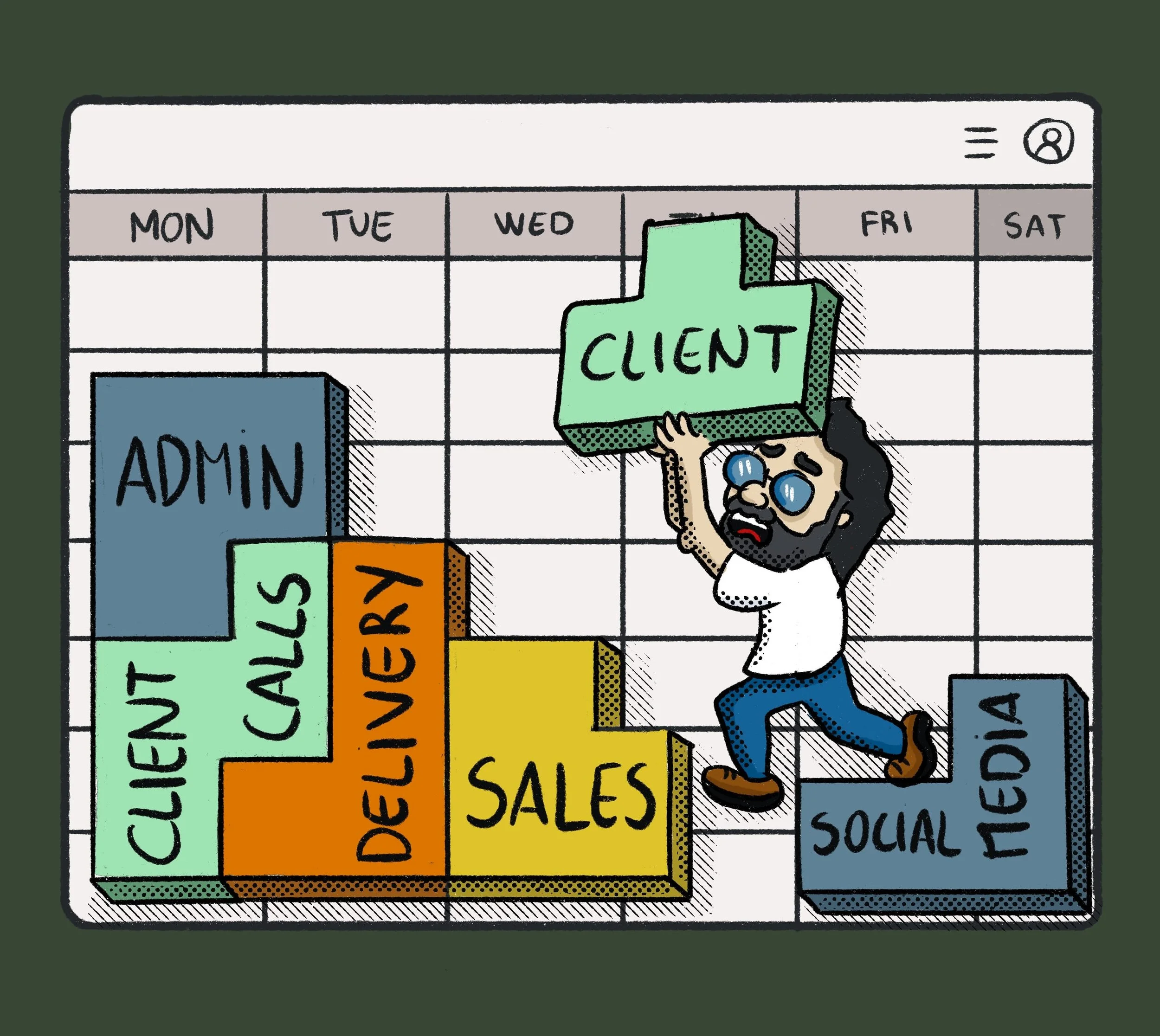
You become very good at delivering work, clients are happy, projects move forward, invoices get paid. But the business itself barely evolves, it’s been one year and you are exactly in the same place.
Your positioning stays a bit fuzzy, your offers remain slightly improvised, your pricing stays reactive and you barely have processes. This happens because strategic thinking requires space and time. And space is something most solo professionals never intentionally create.
Inside companies, strategy happens because it’s built into the structure: there are planning meetings, leadership discussions, offsites.
Moments where people pause and ask what are we actually doing here? (although by experience they should be asking this one more often). And where are we going next?
In your solo business, nobody creates those moments for you, you have to design them yourself. And that turns out to be harder than expected.
This is why many solo businesses stay stuck in a constant hypnotic loop, the work continues, your sales are reactive, the work starts again, revenue might even grow. But the business model never evolves.
The successful solopreneurs break this cycle by introducing intentional time to work on the business itself. Not occasionally by accident, regularly and intentionally. Protected from client demands, and it’s simply non-negotiable.
That structure comes from scheduling it into the week, and its often helpful working alongside others who are doing the same. Strategy rarely happens accidentally, it needs a container, and it’s your responsibility to create it.
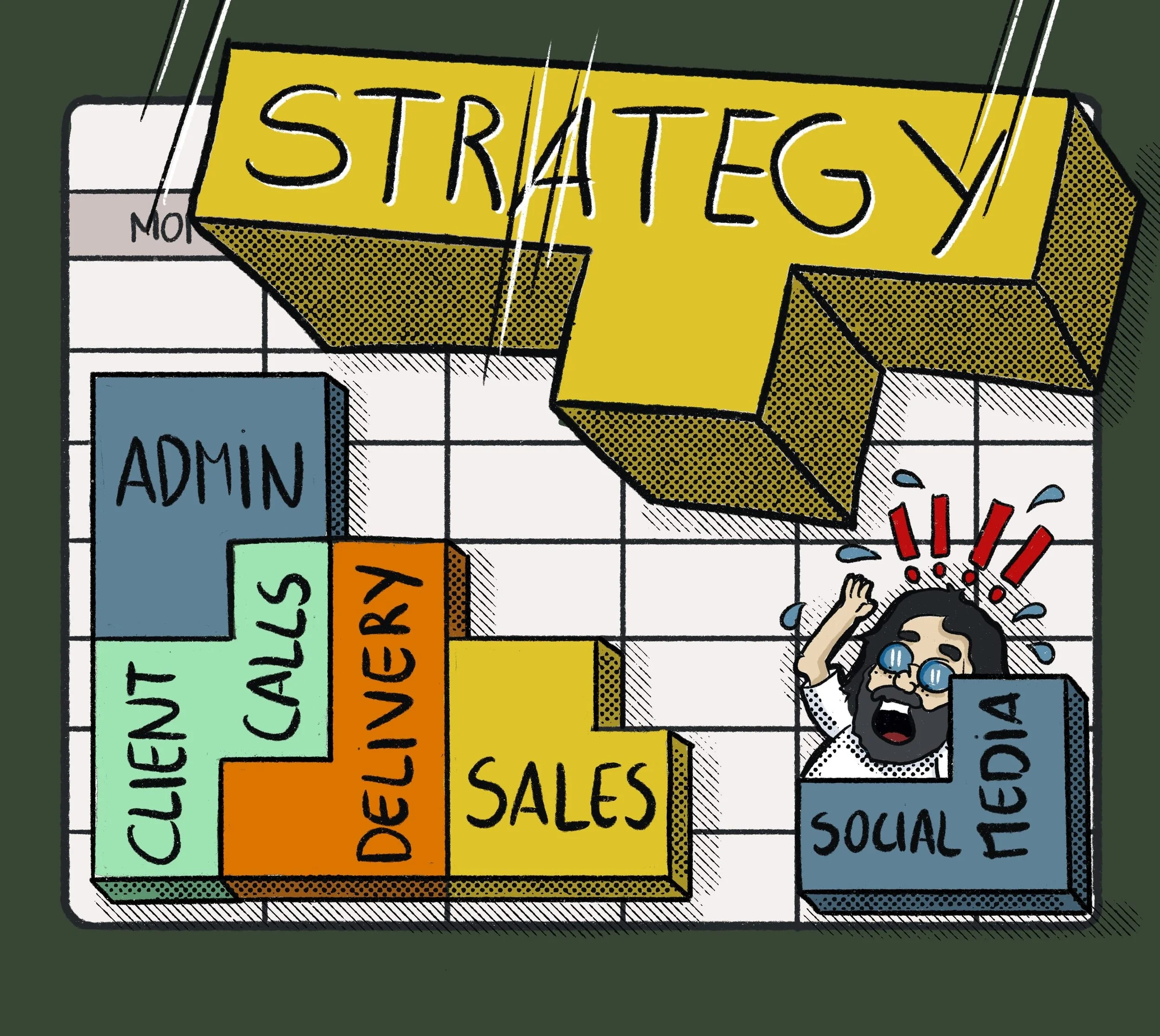
This is why many successful founders don’t try to build their business entirely alone.
They deliberately create environments where strategic thinking happens: conversations with peers, structured time to step back, or spaces where business questions get challenged instead of sitting unanswered for months.
If this is a familiar problem, it might be worth stepping back and looking at the structure of your business. I offer Free Business Strategy Calls for exactly that reason.
It’s a 45-minute conversation where we look at your current situation and identify what might need to change to move your business forward.
You can book one here.
Out of curiosity: When was the last time you intentionally worked on your business?
Hit reply and tell me, I read every response.