You have been told to think bigger, move faster, fail faster, take the risk. But at what cost?
Some conversations feel like they are always going to happen, burnout and resilience is one of them.
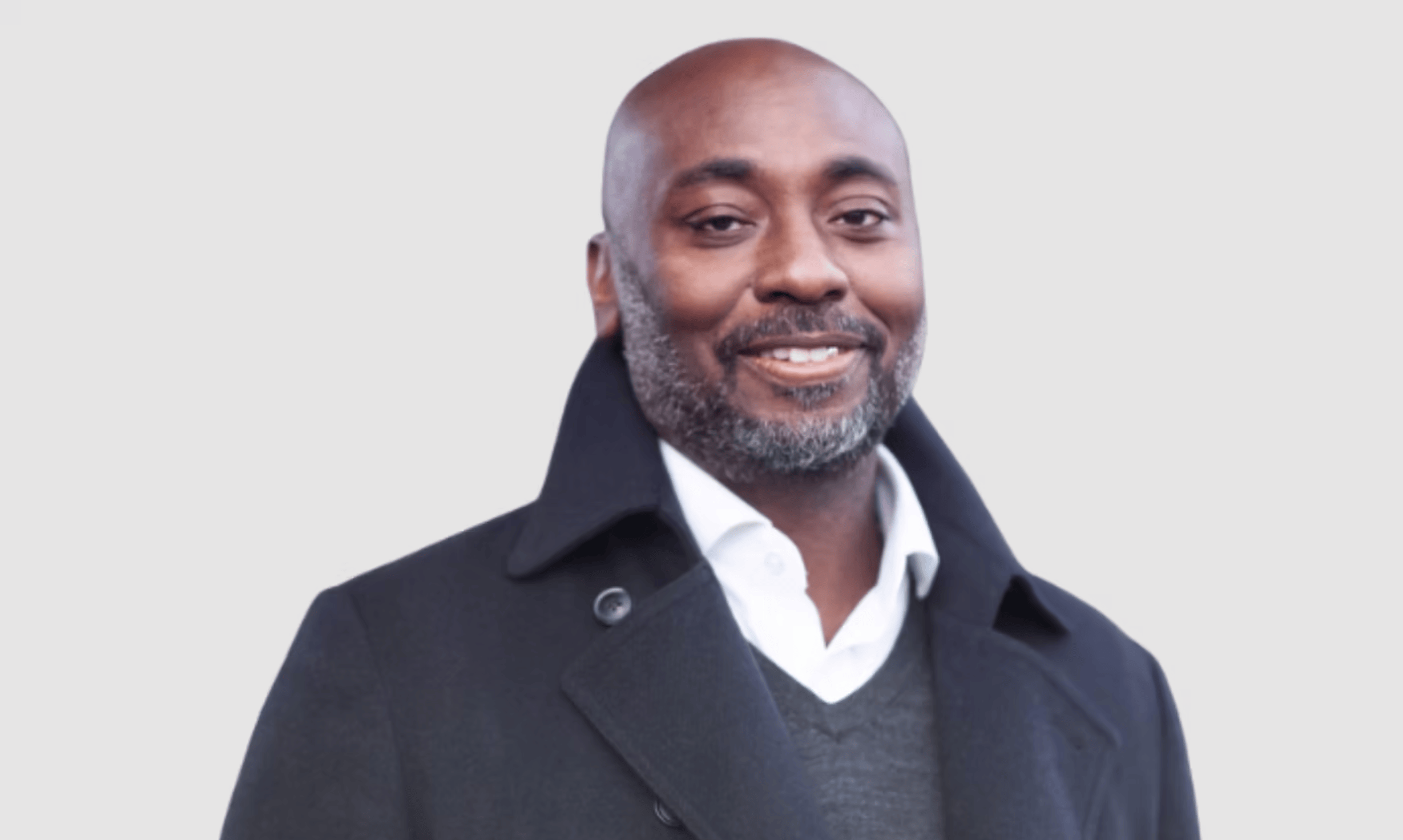
Earl Talbot and I are coaches in the Brightroom community, from Irina Alexandra. We got talking and found common ground around resilience, solopreneurship, and what it costs to keep going when you're the whole business. It takes a lot doesn't it?
We'd both been through burnout and we'd both sat with clients who had too. And we both knew that most of what gets said publicly about resilience barely scratches the surface and can often do more damage than good.
Earl is joining us as an expert guest inside the Solo Accelerator, where he'll be running a live working session on resilience for solopreneurs. If you're not in the program yet and want to be in the room, you can find out more and join here.
Earl has been doing this work for over twenty years. He's not the kind of coach who gives you a plan and checks in monthly. He works on the stuff underneath, the identity you've outgrown but it's still there, the narrative that stopped fitting but you keep telling, the version of yourself that got you here but might not be the one that takes you further.
Let's get into it.
What's the most unhelpful belief people have about resilience and what does it cost them?
I hear the same sentence in almost every room I work in, from corporate teams to founders running everything on their own. "I'm fine, I always bounce back." It's said with a kind of pride, and I understand why, because it usually is true.
The belief underneath it is that resilience means taking whatever comes, getting back up, and carrying on doing exactly what you were doing before. You get knocked down, you get back up, and you go again, as many times as it takes until you finally break through. It's a very linear idea of strength, and a very reactive one, because it only ever switches on once something has already hit you.
What it costs is the ability to think differently about the thing that keeps knocking you down. When all your energy goes into getting back up, there's very little left for being strategic, for being resourceful, for generating a new way through. You end up meeting the same challenge with the same approach, and calling the repetition resilience. The people who are best at bouncing back are often the last to ask whether they should be standing in that spot at all.
Resilience is one of the most overused words in business. You talk about capacity instead. What's the actual difference and why does it matter which one you're building?
The way most people use the word, resilience only shows up after something has gone wrong. It's measured in the aftermath, by how quickly you recover, which means it's reactive by design. You almost need things to go badly to prove you have it.
Capacity is proactive. It's what you build ahead of the challenges you know are coming, because in business, and especially in a solo business, they are always coming. It's the room you create inside yourself to hold uncertainty, to stay clear when a decision is difficult, to remain in good relationship with a client or partner when things are tense, and to choose your response instead of repeating your reflex. You build it in the calmer seasons and you draw on it in the harder ones.
That's what I mean by Recoded Resilience. It moves the work from recovery to preparation. I've run this with teams inside organisations like Aston Martin Aramco F1 and Kerv, and the shift people feel is that resilience stops being a test they pass or fail and becomes something they can deliberately grow. For a solopreneur that matters even more, because you are the only reserve the business has, and the time to build that reserve is before you need it.
A lot of solopreneurs are performing fine on the outside, clients coming in, business moving, but privately asking whether this is still the right direction. What's actually happening there, and why does success make it harder to name?
What I see in a lot of solopreneurs is that the outer metrics and the inner signal have drifted apart. The business is still responding to the person you were when you started it, while the person you are now is asking different questions.
Success makes that harder to name because there's nothing obvious to point at. If the business were failing, you'd have permission to question it. When it's working, the question can feel ungrateful, and everyone around you reflects the success back, so you start to doubt your own signal. Most people wait until something breaks before they let themselves ask. I'd rather they asked while things are still working, because that's when they have the most choice.
Most solopreneurs don't notice when the identity that built the business stops fitting the business they're building. What are the early signs?
The earliest sign is usually energy rather than results. Certain calls, certain clients, certain kinds of work start to cost more than they used to, even though nothing about them has changed on the surface. You notice a small drop in your body before you've put it into words.
Another is that decisions start feeling heavier than they should. Something that would once have taken you a morning sits on your list for weeks. You might find yourself describing your business in language that was true three years ago, and hearing it land slightly flat, even to you.
And then there's mental noise. Overthinking, looping, rehearsing the same conversation in your head. Most people treat that as a personal flaw to manage. In The Inner Compass, the one to one process I take clients through to find their direction again, we treat it as an alarm. That noise is usually one of the clearest signals that you're operating from a position that no longer fits who you're becoming, and it tends to arrive long before any numbers change.
You've worked with people who've done therapy, business coaching, strategy work. All of it helped, none of it reached the thing that actually needed to change. What is that thing, and why does it keep getting missed?
The thing that keeps getting missed is the person doing the choosing. Therapy often looks at where you've come from, business coaching looks at where you're going, and strategy looks at the business itself. All of that is valuable. What tends to sit untouched in the middle is the identity that's making every one of those decisions, and the story it's telling itself about who it's allowed to be.
It gets missed partly because it's hard to look at the thing you're looking through. And it gets missed because most of that work happens in the head. We ask people to analyse, plan and reason their way through something they feel in their body, sense intuitively, or know at a deeper level they haven't yet given language to.
That's why I work with clients on The 5 Intelligences: the cognitive, the emotional, the physical, the intuitive and the spiritual. The work is to bring all five into harmony, so that no single one is making decisions on behalf of the others. When only one is being consulted, you can make very intelligent decisions that still feel wrong. When they're working together, decisions feel settled as well as sensible, and that's usually where the change people have been looking for finally shows up.
Self-awareness gets talked about a lot but practiced rarely. What does it actually look like in the context of running a solo business and what does the lack of it cost?
I wrote a book called Leading with Self-Awareness, and the most useful version of self-awareness is much less impressive than the title suggests. It's the half second before you reply to a difficult client email, when you notice the state you're in and ask whether that's the state you want to be replying from.
In a solo business it looks like knowing what's driving you when you set your prices, when you say yes to work you don't want, when you push through another late night. It's catching the narrative as it runs, the one that says you have to prove yourself or that rest has to be earned, and recognising that it's a narrative rather than a fact. I call the deeper version of this Inner-standing, which is the practice of slowing down enough to hear what all of you is saying, rather than only the loudest part.
The cost of not having it is that you build a business shaped by patterns you never chose. Plenty of people leave a job to escape a certain kind of pressure and then, without noticing, rebuild the same job around themselves, with themselves as the most demanding boss they've ever had.
A lot of the weight solopreneurs carry wasn't consciously chosen. It was absorbed. Other people's standards, timelines, definitions of what bold looks like. How do you tell the difference between what's yours and what you just inherited?
One simple test is to ask whose voice it is. When you hear yourself saying "I should be further along by now," pause and notice where that sentence comes from. Often it has a familiar accent, a parent, a former manager, the founder on social media whose timeline you've quietly adopted as your own.
Another is to notice how it feels. What's yours tends to feel like a pull, something you move toward even when it's hard. What you've inherited tends to feel like a push, pressure from behind that leaves you tired even when you meet it.
In the workshops I run, one of the exercises asks people to make a list I call Not Mine, the expectations, standards and responsibilities they've been carrying that were never theirs to carry. Then they choose one to hand back. It's a surprisingly emotional exercise, because most people have never separated the two before. You can't put something down until you've noticed you're holding it.
There's a pattern where someone keeps stopping just before they get where they want to go, not because they don't know the way, but something pulls them back. What is that?
I think of it as a ceiling, and it's very rarely about capability. The person usually knows exactly what to do next. What pulls them back is that getting there would require them to become someone their current identity hasn't met yet, and part of them isn't sure that new person is safe.
People often call it self-sabotage, and I'm not fond of the word because it makes the behaviour sound like an enemy. I see it as loyalty to an older version of you, a version that kept you safe, kept you liked, kept you belonging somewhere. That part of you is doing its job well. It just hasn't been told the job has changed.
So the work isn't to push harder through the ceiling. It's to find out what the ceiling is protecting, and whether that protection is still needed. When people see that clearly, the next step often becomes much simpler than they expected, because they've stopped fighting themselves to take it.
Burning out in a job and burning out in your own business feel completely different. What's the difference and why does the solo version hit harder?
In a job, burnout has somewhere to go. There's a structure to point at, a manager, a culture, a workload someone else set. It's painful, but part of you can locate the cause outside yourself, and leaving is at least an option.
In your own business, the business is you. You chose it, you designed it, and often you left something else to build it. So when you burn out, it doesn't just feel like exhaustion, it feels like a verdict on you and on the decision you made. There's nobody to hand it to, and the income usually depends on you continuing to show up.
That's why it hits harder, and why solopreneurs often hide it for longer. Admitting it can feel like admitting the dream was a mistake. What I try to help people see is that burning out inside something you built doesn't mean you built the wrong thing. More often it means you built it with the wrong version of yourself at the centre, the one that believes rest is a reward for finishing, when the work is never finished.
Scarcity does something specific to decision-making. When the pressure is financial and it's right now, how do you build resilience without the luxury of stepping back?
Stress narrows thinking. When money is tight, your attention shrinks to the nearest threat, and every option outside that small window disappears. That's a perfectly reasonable thing for a nervous system to do, and it's also why decisions made in scarcity so often create more scarcity.
So you don't need to step back for a month. You need to step back for a few minutes, deliberately, before the decisions that matter. Breathe properly. Notice the state you're in. Then ask a simple question: if I had three months of runway, what would I do here? If the answer is different from what scarcity is telling you, that gap is worth paying attention to.
The second thing is to stop deciding alone. One of the tools I use is a Roundtable, where you bring a decision to a small number of trusted perspectives, real or imagined, before you commit to it. And the third is to shrink the next move rather than the ambition. What is the smallest action that moves you forward and that someone else will know you've taken? Resilience under pressure is mostly built out of those small, honest moves, taken one after another.
Twenty years of this work. What are the biggest lessons about resilience you couldn't have known at the start?
The first is that the body knows before the mind admits it. I spent years trying to think my way out of things I had felt my way into, and it doesn't work. Most of the important signals in my life arrived as a feeling long before I had words for them.
The second is that resilience is seasonal. There are times to build, times to push, times to harvest and times to rest, and a lot of exhaustion comes from trying to live in one season all year round. That understanding became The 12 Month Arc, a way of helping people stop forcing a pace that doesn't match where they are.
The third is that the strongest people I meet are often the most tired, because everyone has learned to lean on them. And the last is that resilience is relational. We were never meant to do this entirely on our own, and the solo in solopreneur describes the business structure. It doesn't need to describe how you live.
For the solopreneur who's been bold for years and is quietly wondering whether they've become someone they didn't intend to be, what's the reframe?
You haven't lost yourself. You've been practising a version of yourself for long enough that it started to feel like the whole of you. That version was useful, it got you here, and it deserves some respect for that. It just may not be the one that takes you where you want to go next.
The other reframe is about what bold means. Most people assume bold means big, the launch, the leap, the dramatic pivot. In my experience, the bold moves at this stage of life tend to be much quieter. Telling the truth about what you no longer want. Saying no to revenue that would bend the business out of shape. Letting yourself slow down without needing a crisis to justify it.
So the question shifts. It's less about what you want to achieve next and more about who you're becoming. When people start orienting from that, the direction tends to clarify on its own, because the work stops being about performing boldness and starts being about living from something steadier.
Where and how can people connect with you?
The best way to reach me is on LinkedIn, or by email at earl@creativemuscle.co.uk. I'm always glad to hear from people when something here has landed for them, or raised a question they're sitting with.
And if you're in the Solo Accelerator, I'll see you in the live session.